Forex scam

Pig Butchering Scams Explained: How It Works

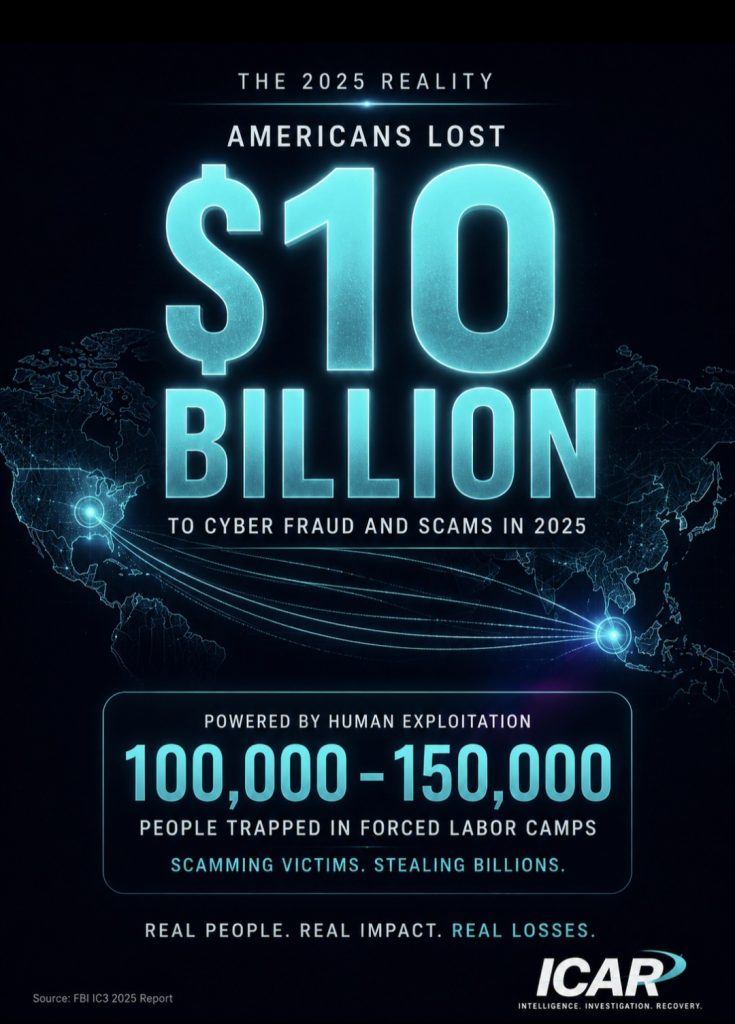
A pig butchering scam is a long-con fraud that combines a manufactured romance or friendship with a fraudulent crypto investment pitch, named for the Chinese term sha zhu pan  “killing pig plate”  a reference to fattening a pig before slaughter. US authorities now attribute at least $10 billion in 2024 American losses alone to Southeast Asia-linked scam networks running this exact model, with Cambodia’s compound-based scam industry estimated to generate up to $19 billion a year, nearly 40% of the country’s GDP. This article covers how the scam actually unfolds relationship by relationship, the forced-labor system powering it, and what makes it different from the crypto-mechanics we covered in our companion Hub article. 100,000–150,000 People the United Nations estimates are held and forced to run online scam operations inside Cambodian compounds alone Source: UN Office of the High Commissioner for Human Rights; Amnesty International, June 2025 Why the Term Is Changing In December 2024, INTERPOL formally urged media and investigators to retire the term “pig butchering” in favor of “romance baiting,” arguing that the original phrase re-victimizes people who were deliberately, professionally manipulated by comparing them to livestock. We use both terms in this guide because “pig butchering” remains the most widely searched and recognized term, but the shift in language reflects something important: these are not victims who were foolish. They were targeted by an industrial-scale operation built specifically to exploit trust. How the Scam Unfolds Stage 1 — Contact Most cases begin with something small and unremarkable: a text to the “wrong number,” a match on a dating app, a follow from a stranger on social media. The opening message is never about money. Stage 2 — The relationship Over weeks or months, a genuine-feeling bond forms: daily messages, shared photos, video calls that are frequently avoided or cut short with excuses. Investigators say this stage alone can run for three to six months before money is ever mentioned. Stage 3 — The reveal The new partner or friend mentions, almost reluctantly, a trading platform or crypto opportunity that’s “changed their life.” They may show screenshots of their own supposed gains. Stage 4 — The small win A modest first investment is allowed to “succeed,” often with a real, small withdrawal permitted to build confidence, the only funds a victim typically ever gets back. Stage 5 — Escalation Larger and larger deposits follow, often framed as needed to “unlock higher tiers” or take advantage of a limited-time opportunity. Some victims are told to recruit friends or family into the same platform. Stage 6 — The wall A withdrawal attempt triggers a sudden “tax,” “compliance fee,” or account freeze. The relationship, and the money, disappear at roughly the same time. The Forced-Labor System Behind the Scam What makes pig butchering distinct from most other fraud categories is who’s actually typing the messages. Multiple government and human-rights investigations: the US Treasury’s OFAC, the UN Human Rights Office, and Amnesty International among them, have documented that a large share of these operations are staffed by trafficking victims themselves, held in guarded compounds across Cambodia, Myanmar, and Laos and forced to run scripts under threat of violence. The UN estimates 100,000 to 150,000 people are held in Cambodian compounds alone, with a further estimated 120,000 in Myanmar. Amnesty International’s June 2025 investigation, based on interviews with 423 survivors, documented torture, electric shocks, and “dark rooms” used to punish workers who missed targets across at least 53 compounds. In September 2025, the US Treasury sanctioned 19 entities across Myanmar and Cambodia, including operations in Shwe Kokko and Sihanoukville  specifically for running forced-labor scam compounds targeting American victims. This matters for victims to understand for one reason above all: the person on the other end of the relationship is frequently a coerced worker, not the mastermind profiting from the scheme. The organizers are often protected by local corruption and armed groups, are the ones law enforcement is now targeting through sanctions and cross-border operations. Who Gets Targeted Investigators note that victims most often fall between ages 30 and 60, primarily elderly victims, though older adults remain heavily targeted in the broader investment-scam category. Professionals, recently divorced or widowed individuals, and people newly active on dating apps are all disproportionately represented, largely because the scam’s success depends on genuine loneliness or a genuine desire for connection, not financial naivety. Learn more about Online Scamming: Signs, Prevention & Safety. Red Flags Specific to Pig Butchering A new online relationship that consistently avoids video calls or in-person meetings A partner who always has a reason they’re unavailable: working overseas, on a ship, deployed An investment “tip” that arrives only after weeks or months of relationship-building Pressure, gentle or otherwise, to recruit friends or family into the same platform A profile photo that reverse-image-searches to a different name or a modeling/stock site What To Do If You’re in One of These Relationships Do not send more money, regardless of how the relationship is framed, a real partner will not ask you to fund an investment. Reverse-image-search their photos and ask directly for an unscheduled video call. Preserve every message, transaction ID, and platform screenshot before accounts disappear. Talk to someone outside the relationship, isolation is a core part of how this scam sustains itself. Report to your national fraud authority (IC3 in the US, Report Fraud in the UK, CAFC in Canada, Scamwatch in Australia)  some funds are now being traced and seized through international operations. Get a professional case assessment for blockchain tracing if crypto was involved. Frequently Asked Questions What does “pig butchering” actually mean? It’s a translation of the Chinese term sha zhu pan, referring to fattening a pig before slaughter, a description of how victims are built up emotionally and financially before being drained. INTERPOL now recommends “romance baiting” instead. Is the person messaging me actually the scammer? Frequently not. Investigations have found large portions of these operations are staffed by trafficking victims forced to work under threat of violence, the organizers profiting

Pig Butchering Scams Explained: How It Works Read More »
Pig Butchering 1

LinkedIn Forex Scam: How Fraudsters Target Professionals

LinkedIn forex scams are among the most sophisticated investment fraud operations ICAR investigates. They target a demographic rarely associated with fraud vulnerability, senior professionals, business owners, executives, and financially experienced individuals in their 40s and 50s, and they do so using the one platform that professional targets trust most: LinkedIn. According to the FBI’s IC3 2025 Annual Report, investment fraud remains the single largest cybercrime loss category, with cryptocurrency investment fraud alone accounting for $7.2 billion in losses. The FTC has documented consistent growth in social media-enabled investment fraud, noting that professionals who would never respond to a cold email scam are systematically deceived through relationship-based approaches on professional networks. This article presents a forensically accurate case study of a LinkedIn forex scam, how it began, how it escalated, what ICAR’s investigation found, and what it tells us about the broader threat to professionals across the UK, US, Canada, Australia, Singapore, and Hong Kong. $7.2 Billion Lost to cryptocurrency investment fraud in the US alone in 2025 Source: FBI IC3 2025 Annual Report The Case: Marcus and the Trading Expert Marcus Chen is 51. He is the managing director of a mid-sized logistics company in Birmingham. He has used LinkedIn daily for twelve years  for business development, industry news, and professional networking. He considers himself financially literate: he has a pension, ISAs, and a modest share portfolio managed by an IFA. In February 2026, he received a LinkedIn connection request from a profile called James Whitfield  described as a ‘Senior FX Strategist | Algorithmic Trading | 14 Years Market Experience’. The profile had a professional headshot, 4,287 connections, a complete employment history at named financial firms, and eleven endorsements for ‘Forex Trading’ and ‘Portfolio Management’. Two of Marcus’s existing connections were mutual contacts. STAGE 1  The Connection February 2026 — Initial contact and relationship building James’s first message was low-pressure and professionally framed: ‘Hi Marcus — I noticed we share connections with [Name 1] and [Name 2]. I work in FX strategy and occasionally share market insights with professionals in complementary sectors. Happy to connect if that’s useful.’ Marcus accepted. Over the following three weeks, James sent six messages, short, considered, market-relevant. He shared commentary on GBP volatility following a Bank of England announcement. He sent a note on a regulatory change affecting institutional forex trading. Nothing about investment opportunities. Nothing about his own returns. âš‘ RED FLAG: Professional credibility was manufactured, not earned The 4,287 connections, the endorsements, the employment history at named firms — all fabricated or inflated. Mutual connections create a false sense of verification. In ICAR’s OSINT investigation, the LinkedIn profile had been created 74 days before the connection request. The headshot was a stock image from a photography subscription service. STAGE 2  The Introduction March 2026 — The investment conversation begins In late March, James mentioned briefly and without pressure, that his team had been running an algorithmic forex strategy with strong results in Q1. He was considering opening a small number of external positions for ‘trusted contacts’ at a flat management fee. He named the platform: PrimeForex Capital. Marcus looked it up. The website was professional. Registered address in London. FCA registration number in the footer. A ‘Regulatory’ section with documentation. Client testimonials with photographs. He checked the FCA register. He searched for ‘PrimeForex Capital.’ It appeared. He read the entry. The name matched. The registration number matched. What Marcus did not notice because he did not know to look, was that the FCA registration belonged to a different firm: a legitimate, authorised brokerage that had nothing to do with PrimeForex Capital. The fraudulent platform had copied the registration number and company details of a real FCA-authorised firm. This is a clone firm impersonation, one of the most common techniques used in UK investment fraud. âš‘ RED FLAG: Clone firm impersonation — FCA number belongs to a different authorised entity The FCA maintains a warning list of known clone firms at fca.org.uk/scamsmart. Verifying requires matching the company NAME, registration NUMBER, and contact details simultaneously, a number that matches but belongs to a different firm is impersonation, not authorisation. Always verify all three elements independently. How PrimeForex Capital Was Built ICAR’s subsequent OSINT investigation of PrimeForex Capital revealed the following: â–Œ OSINT INVESTIGATION — PRIMEFOREX CAPITAL (FICTIONAL) // Domain analysis Domain: primeforexcapital.com Domain age:          61 days at victim first contact Registrar:           Namecheap (privacy-protected) Registrant:          REDACTED — Panamanian privacy service SSL certificate:     Let’s Encrypt (automated, free)   // FCA impersonation FCA number claimed:  [6-digit number from legitimate firm] Actual FCA holder:   Different authorised brokerage (11 years registered) FCA ScamSmart:       Clone firm warning NOT yet issued (platform too new) FCA register check:  Number exists — but belongs to different entity   // LinkedIn profile — ‘James Whitfield’ Profile created:     74 days before connection request Headshot:            Stock image — Getty Images subscription library Employment history:  Named real firms — no verifiable tenure at any Connections:         4,287 — many purchased via third-party connection service Mutual connections:  2 — both passive LinkedIn users unlikely to be contacted   // Platform interface Interface clone:     Matched EU-regulated forex broker (83% CSS similarity) Testimonial photos:  Stock images — identified via reverse image search Regulatory section:  Copied verbatim from legitimate broker’s compliance page   // Infrastructure Shared hosting IP:   Resolved to known fraudulent domain cluster (14 domains) Server location:     Netherlands — masked via Cloudflare CDN STAGE 3  The Deposit Ladder April–May 2026 — £95,000 transferred across 9 transactions Marcus’s first deposit was £5,000. His dashboard showed a 4.2 percent return in the first week. James sent a brief note: ‘Q1 was strong. We are anticipating continued momentum in GBPUSD positioning. Pleased with how your allocation performed.’ Over the next six weeks, Marcus made eight further transfers. The deposits escalated: £8,000, then £12,000, then £18,000. Each was accompanied by updated portfolio statements showing consistent gains. Each time Marcus suggested withdrawing some profit to test the platform, James advised patience  ‘reinvestment compounds the position’  and Marcus complied. Total deposited by 15 May: £95,000. âš‘ RED

LinkedIn Forex Scam: How Fraudsters Target Professionals Read More »

LinkedIn Forex Scam