
A message arrives from a number you do not recognize. Hi Jessica, sorry I’m running late, see you at 7. You are not Jessica. The obvious move is to reply, wrong number, and move on. According to the Federal Trade Commission, that single exchange is often the opening move of a scam that, across all text based fraud, cost Americans $470 million in 2024, five times what was reported just four years earlier. This article explains why these messages are essentially never actual mistakes, what happens after someone replies, and why even a brief polite correction carries more risk than most people realize.
It Is Never Actually the Wrong Number
These messages are mass sent to enormous batches of numbers, either scraped from data breaches or generated in sequence, with no real Jessica and no real dinner plan behind any of them. The personal detail, a name, a time, a plausible reason for the mix up, exists purely to make the message feel human rather than automated, since a fully generic message is easier to ignore. Research from McAfee found that roughly one in four Americans have received a message matching this exact pattern, which gives a sense of just how widely these campaigns are run.
The Federal Communications Commission specifically flagged this category in a 2022 consumer warning after RoboKiller estimated Americans were receiving billions of robotexts in a single month. What has changed since then is not the tactic itself but its role as a deliberate entry point into a much longer and more damaging scheme.
The template itself has become remarkably consistent across campaigns, which is worth understanding because recognizing the pattern is often the fastest way to identify one. A first name that is common but not overly generic. A brief, mundane excuse, running late, wrong group chat, confused about an address. Just enough specificity to feel like a real mistake, and just enough vagueness that the message works equally well sent to a thousand different numbers at once. Genuine wrong numbers, by contrast, tend to be shorter, more confused sounding, and usually stop the moment the sender realizes their error rather than continuing to test for a response.
Why Replying Feels So Natural, and Why That Matters
Part of what makes this tactic effective has nothing to do with technology and everything to do with ordinary social habits. Most people are conditioned to respond politely when someone appears to have made an honest mistake reaching out to them. Ignoring a seemingly confused stranger can feel rude in a way that ignoring an obvious advertisement does not. Scam operators are relying specifically on that social reflex, because it reliably produces a higher reply rate than a message that reads as an obvious solicitation.
This is worth naming explicitly because understanding why a tactic works is often more protective than simply being told not to fall for it. The urge to type wrong number, no worries is not a character flaw or a sign of gullibility. It is a normal social instinct being deliberately exploited at scale.
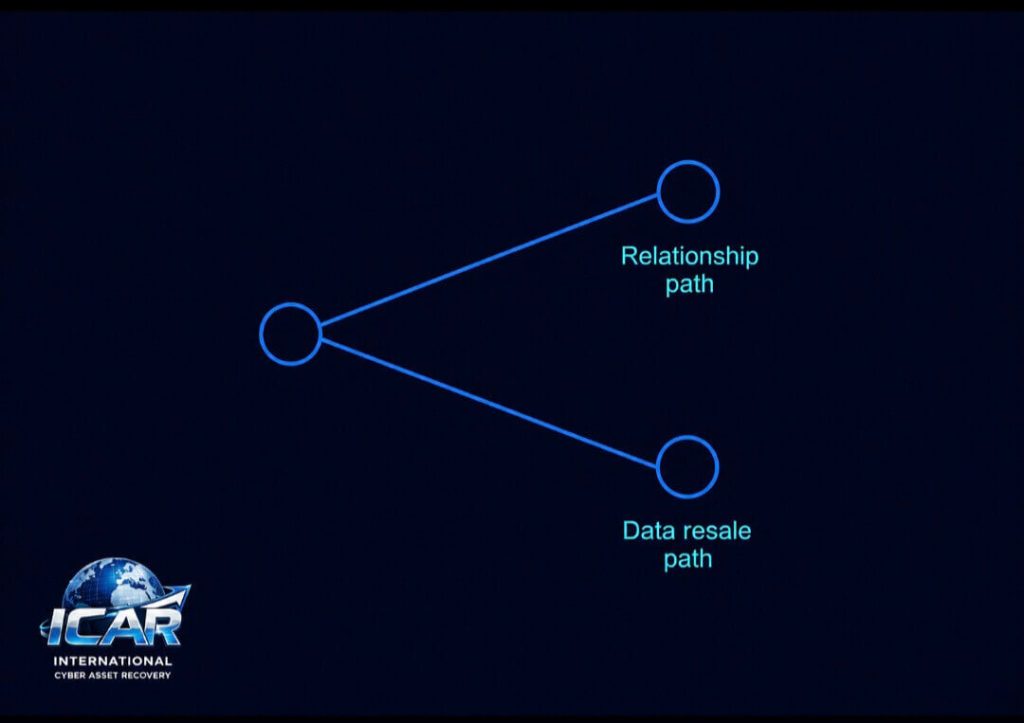
Path One: The Slow Build Toward Pig Butchering
If a target replies at all, even just to correct the sender, the scammer treats that reply as a signal worth pursuing. What typically follows is not an immediate pitch but a long, patient conversation, days and sometimes weeks of ordinary seeming friendliness, before any mention of money or investment appears. This pattern is documented at length in our companion Hub article on pig butchering scams, and the wrong number text is simply the most common single doorway into it.
The scale of what this leads to is significant. The FBI’s 2025 Internet Crime Report found that cryptocurrency investment fraud, the category that captures the large majority of pig butchering losses, was the single largest source of financial harm to Americans that year at more than 8.6 billion dollars. The wrong number text is rarely the expensive part of the scam. It is the low cost, high volume filter that identifies which numbers are worth the weeks of relationship building that follows.
What makes this filtering approach so efficient from the scammer’s perspective is the enormous mismatch in cost. Sending a text message costs essentially nothing at scale, while building a convincing weeks long relationship with a genuinely receptive target requires real time and effort. The wrong number opener exists specifically to sort a huge pool of random numbers down to the small subset of people willing to engage at all, before any real investment of the scammer’s own time begins.
Path Two: The Reply Itself Has Resale Value
This is the part most warnings skip entirely, and it matters even for someone who never falls for the relationship angle at all. Fraud researchers at TransUnion have noted that a scammer’s real objective is not always a large financial payday. Even a short reply confirms that a phone number is active, monitored, and attached to a real person willing to engage with an unknown sender. That confirmation alone has resale value on data marketplaces, since a verified active number is worth meaningfully more to other fraud operations than an unconfirmed one pulled from a leaked list.
In some documented cases, a scammer who extracts enough information from a seemingly harmless exchange has gone on to locate a target’s social media accounts and lock them out entirely, then demand a smaller payment to restore access. None of this requires the elaborate multi week pig butchering build. It only requires a single reply confirming the number is live.
It is worth understanding roughly how this secondary market functions, without treating it as anything mysterious. A confirmed active number, tied to a real, responsive person, becomes a data point that gets bundled with thousands of others and sold as a verified contact list. Other fraud operations then purchase these lists specifically because they carry a meaningfully higher success rate than cold, unverified numbers. A single reply, in effect, moves a phone number from a low value pile into a high value one, entirely separate from whatever happens in that particular conversation.

Why ‘Wrong Number, Sorry’ Still Counts as Engagement
The instinct to be polite and correct a stranger’s mistake feels harmless, and in an ordinary context it would be. The problem is that an automated scam operation cannot tell the difference between a warm, engaged reply and a brief correction. Both confirm the same two things: the number is real, and someone on the other end is willing to respond to a message from an unknown sender. That is the entire qualifying signal the scam needs to move a number from an unconfirmed list into an active one.
How to Tell an Innocent Exchange From an Escalating One
For anyone who has already replied and is unsure whether to be concerned, a few signals distinguish a genuinely confused sender from a scam operation testing engagement. A real person who has mistyped a number typically apologizes once and stops, without asking follow up questions about who you are or what you do. A scam account, by contrast, often continues the conversation past the correction, asks a friendly follow up question, or pivots quickly to a compliment or shared interest designed to keep the exchange going. Any continuation beyond a single polite correction and stop is worth treating as a signal to disengage entirely rather than a normal continuation of small talk.
How Carriers Are Responding
Wireless carriers have invested in filtering technology designed to catch exactly this kind of mass sent message before it reaches a subscriber at all, and the volume of reports forwarded to 7726 plays a direct role in how effective that filtering becomes over time. Each reported message helps train detection systems to recognize similar patterns faster, which is part of why reporting matters even for a message that was easy to ignore. Regulatory frameworks around caller and sender authentication have also tightened in recent years, though enforcement against high volume text campaigns specifically has lagged behind the equivalent work already done on scam phone calls, which is one reason text based fraud losses climbed so sharply between 2020 and 2024 even as awareness of phone based scams improved.
What To Do Instead
- Do not reply at all, not even to correct the sender or ask them to stop texting.
- Forward the message to 7726, spelled SPAM on a keypad, which reports it directly to your wireless carrier and helps flag similar messages for other users.
- Report the message through your phone’s built in reporting feature, available in both the iMessage and Google Messages apps.
- Report to the FTC directly at ReportFraud.ftc.gov, since aggregated reports are part of what regulators use to track and act on emerging campaigns.
- Block the number after reporting, rather than before, since some reporting tools rely on the message still being accessible.
If You Already Replied
A single reply is not, on its own, a catastrophic event. The risk comes from continuing the conversation over days or weeks, since that is where the relationship building and eventual financial pitch actually happens. If you replied once and stopped, the most useful next step is simply not to continue, block the number, and report it using the steps above. If a conversation has continued for some time and has begun to involve any mention of investing, cryptocurrency, or a lucrative opportunity the other person claims to have access to, that is worth treating seriously and reviewing against the warning signs covered in our full guide to pig butchering scams.
It is also worth resisting any embarrassment about having engaged this far. These campaigns are run by people who study persuasion professionally, and a longer engagement reflects the sophistication of the tactic rather than any particular carelessness on the part of the person targeted. If money has already changed hands at any point, whether a small amount framed as a gift or a larger sum framed as an investment, stopping further payments immediately matters more than any other single action, followed by preserving every message, transaction record, and identifying detail about the sender before the account or platform disappears.
Frequently Asked Questions
Are wrong number texts always a scam?
The overwhelming majority sent to random or unfamiliar numbers with a vague personal detail and no prior context are part of an automated scam campaign, rather than a genuine misdial, based on FTC and FCC consumer warnings on the pattern.
Is it safe to just reply wrong number and nothing else?
Any reply, including a brief correction, confirms the number is active and monitored, which itself has value to the sender regardless of whether a longer conversation follows. Not replying at all is the safer option.
What is SPAM 7726 and does it actually work?
Forwarding a suspicious text to 7726 sends it directly to your wireless carrier’s spam reporting system, which carriers use to identify and block similar messages more broadly, according to FTC guidance.
How does a wrong number text turn into a pig butchering scam?
If a target engages, the sender typically shifts into an extended, patient conversation over days or weeks before ever mentioning money, gradually building trust before introducing an investment opportunity, a pattern covered in depth in our Pig Butchering Scams Hub article.
Can a wrong number text scam me even if I never send money?
Yes. Confirming an active phone number has resale value on its own, and in some documented cases scammers have used information from a short exchange to compromise social media accounts.
Should I report a wrong number text if I did not lose any money?
Yes. Reports to the FTC and to carrier spam systems help identify and block active campaigns even when no individual loss occurred, which protects others who may be less cautious.

If a wrong number text has developed into an ongoing relationship involving talk of investing or cryptocurrency, it is worth reviewing the situation carefully before any money changes hands. If funds have already been sent, ICAR Cyber Recovery investigators can help trace where they moved and assess what options may be available. Recovery depends on the specific facts of each case and cannot be guaranteed. A free case assessment can help clarify your situation.
Free Case Assessment: free-case-assessment
Contact Support via WhatsApp: WhatsApp